60-inch TV dimensions, viewing distance and mounting height
The exact picture size, the right viewing distance and how high to hang it, worked out for a 60-inch TV.
A 60-inch TV’s picture is 52.3 inches wide and 29.4 inches tall. With a modern thin frame, expect the set to be a little under an inch wider and taller. Sit about 6 ft to 8 ft 2 in away, and mount it with the center of the screen about 42 inches from the floor.
How big is a 60-inch TV?
TV sizes are measured across the diagonal of the picture. For a 16:9 screen the width is 0.872 times the diagonal and the height 0.490 times, so a 60-inch screen is 52.3 × 29.4 inches (133 cm × 75 cm), with 10.7 square feet of picture.
Two things make a real set bigger than its screen. The frame (bezel), usually a few tenths of an inch on each side on current models. The stand adds height and, more importantly, depth. Some manufacturers also sell sets as a size “class”, with a measured diagonal slightly under the nominal size; the dimensions they print for the whole set are what matter for fit.
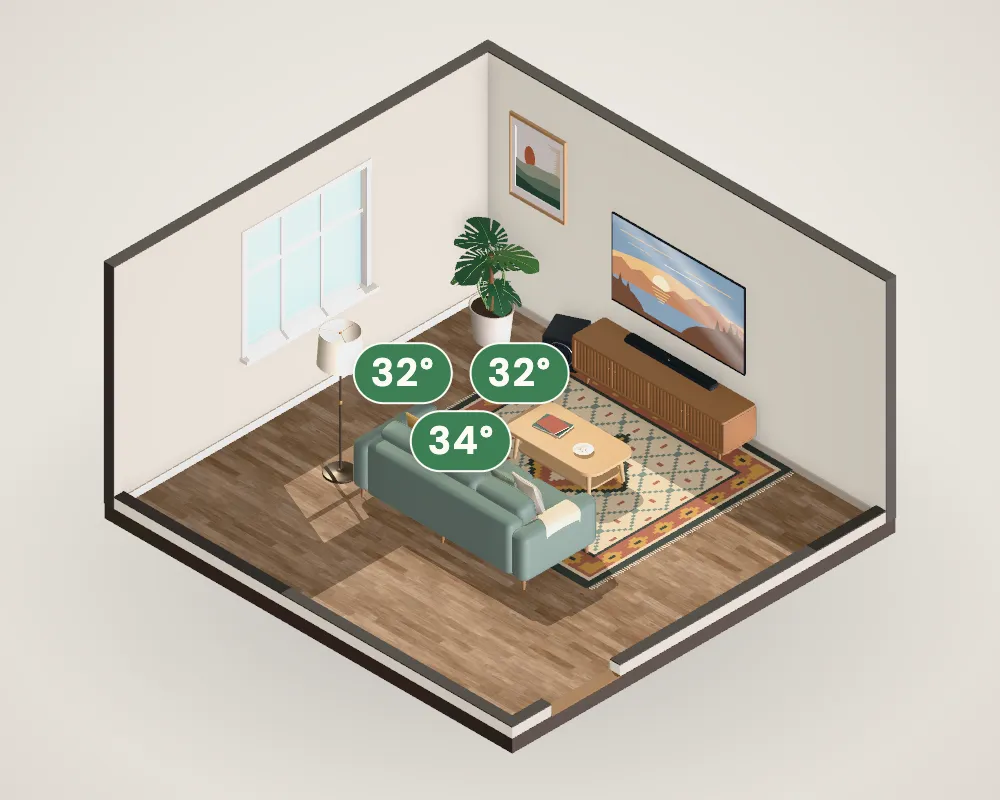
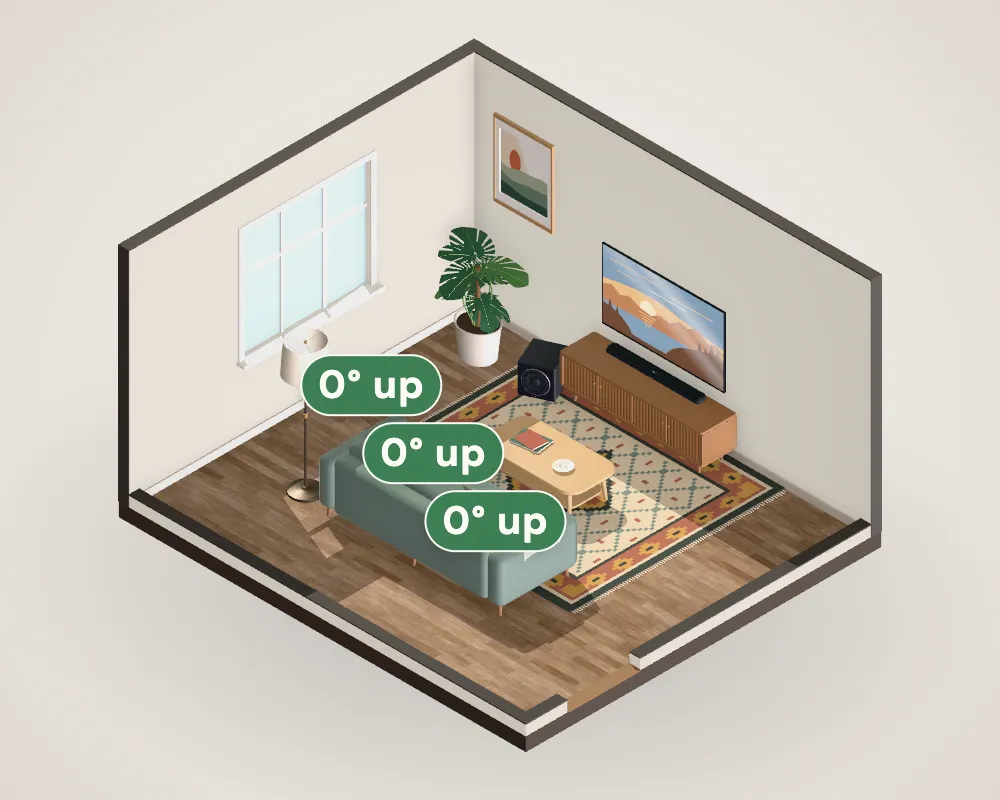
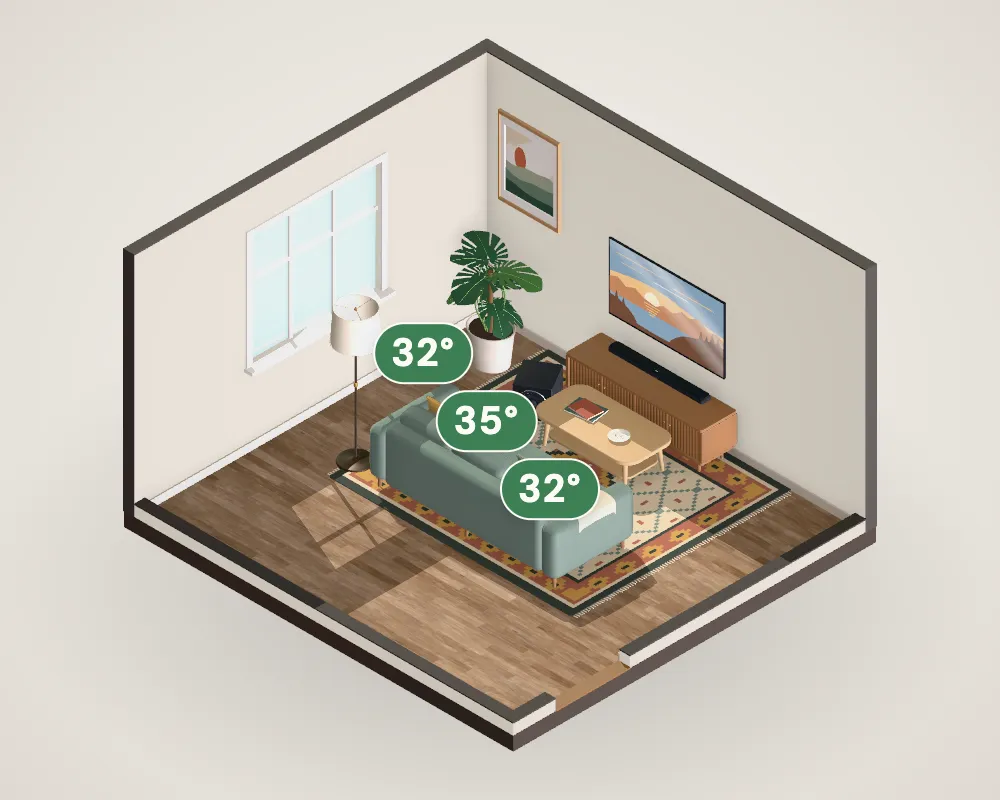
Few current TVs are sold as 60-inch models; most ranges jump from 55 to 65 inches. If you are looking at a 60-inch because it is what your space allows, it fills the recommended 30–40° of your view from about six to eight feet.
That makes it a good choice for a wall or cabinet opening that a 65-inch would not fit. Measure the opening first: a 60-inch screen is about 52 inches wide and 29 inches tall before the bezel.
If your space can take 57 inches of width, a 65-inch model gives you about 17% more screen area, and the choice of models is much wider.
Current 60-inch TVs
How far to sit from a 60-inch TV
The useful measure is the viewing angle: how much of your view the picture fills. SMPTE’s reference viewing distance gives about 31–33°, and THX’s cinema guideline is 40°. For a 60-inch screen, that band runs from about 6 ft (40°) to 8 ft 2 in (30°), measured from your eyes to the screen.
| Guideline | Viewing angle | Distance |
|---|---|---|
| Maximum for 4K video (cited in CEDIA/CTA RP22) | 61° | 3 ft 8 in |
| THX cinema | 40° | 6 ft |
| SMPTE reference (3 to 3.2 picture heights) | 31–33° | 7 ft 4 in–7 ft 10 in |
| Edge of the recommended band | 30° | 8 ft 2 in |
| Relaxed TV watching (Samsung’s rule of thumb) | about 27° | 9 ft 1 in |
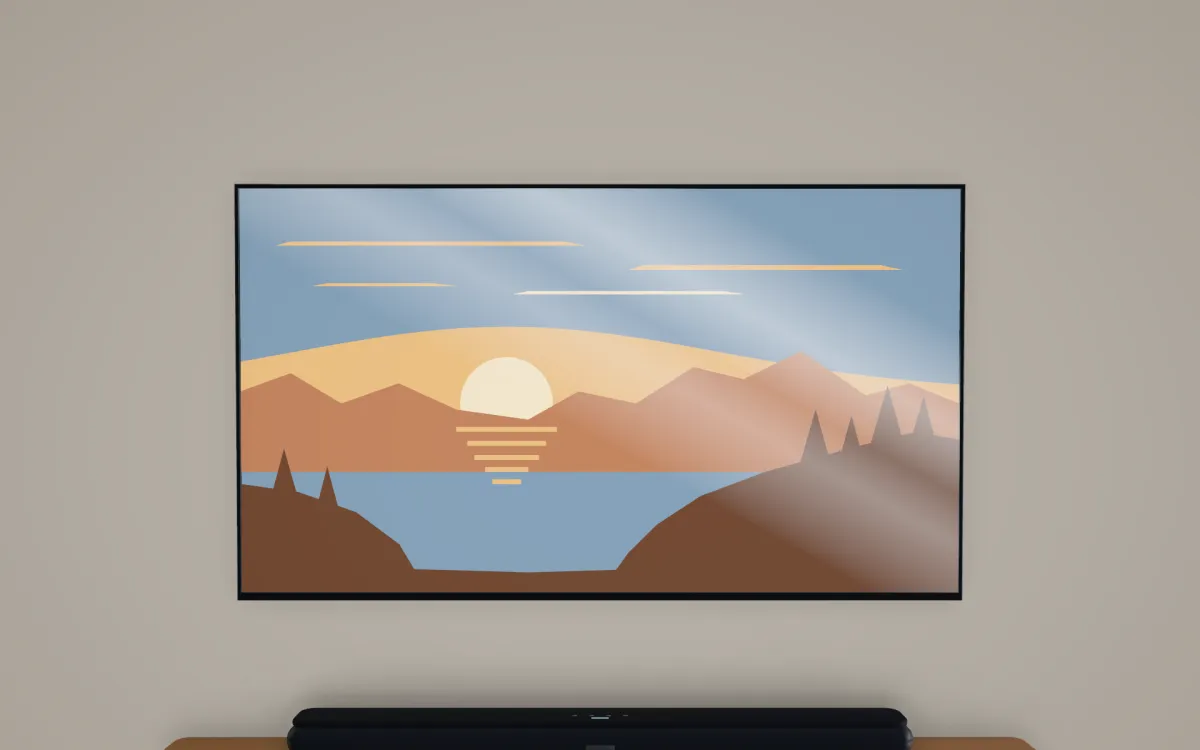
Resolution sets a second, closer limit. ITU-R BT.1845 and BT.2022 design viewing distances so that each pixel spans about one arcminute, roughly the limit of normal vision: 1.6 picture heights for 4K and 3.2 for 1080p. For a 60-inch screen that is about 3 ft 11 in for 4K and 7 ft 10 in for 1080p, so at normal sofa distances a 4K 60-inch set shows no visible pixel structure, while a 1080p set can look slightly soft if you sit at the near end of the band.
TV size & viewing distance calculatorEnter your seating distance to see the angle each size gives. Open →How high to mount a 60-inch TV
For a sofa, aim the center of the screen at seated eye height, about 42 inches from the floor (Samsung’s guidance for an average adult on a typical couch). For a 60-inch TV that puts the bottom edge of the picture about 27 inches from the floor and the top about 57 inches.
If the TV has to go higher, THX suggests keeping your line of sight within 15° of the screen center. The further back you sit, the higher it can go:
| Eye-to-screen distance | Viewing angle | Highest center within 15° | Bottom edge at that height |
|---|---|---|---|
| 6 ft | 40°recommended | 61″ | 47″ |
| 7 ft | 35°recommended | 65″ | 50″ |
| 8 ft | 30°recommended | 68″ | 53″ |
| 10 ft | 25°small from here | 74″ | 59″ |
Over a fireplace, a 60-inch TV usually ends up with its center well above 60 inches, past 15° from typical seats, and manufacturers warn about heat. Our fireplace guide covers both.
TV mounting height calculatorYour sofa, your distance, your mantel: get the center and bottom-edge heights. Open →Will a 60-inch TV fit your room?
- Wall: the screen is 52.3 inches wide; the set a little under an inch more. Leave some wall either side, especially next to windows or a door frame.
- Console: design guides suggest a console a few inches wider than the TV, roughly 54–58 inches for a 60-inch set. The hard minimum is the stand width: feet near the edges need almost the full width of the TV.
- Room depth: with the sofa against the back wall, your eyes end up about two feet in front of it. Sitting 6 ft to 8 ft 2 in from a wall-mounted screen needs a room about 9 ft to 11 ft 6 in deep, more if the TV stands on a console or there is a walkway behind the sofa (36 inches is the usual minimum, from NKBA’s planning guidelines).
- Suits: living rooms where the sofa is about six to eight feet away.
The quickest check is to see it: open a room at your size in Room Studio with a 60-inch TV already on the wall, then drag the sofa to where yours sits.
60 inches compared with other sizes
Questions people ask
How wide is a 60-inch TV?
The picture of a 60-inch 16:9 TV is 52.3 inches (133 cm) wide. We didn’t verify a current 60-inch model, so we can’t give a cabinet width: frames vary by model, and some sets sold in a size “class” measure a little under it. Check the maker’s specification for the exact set.
How tall is a 60-inch TV?
The picture is 29.4 inches (75 cm) tall. The frame and any stand add to that by amounts that vary between models; check the maker’s specification.
How far should you sit from a 60-inch TV?
About 6 ft to 8 ft 2 in. At that distance the screen fills 30–40° of your view, the range SMPTE’s reference distance and THX’s cinema guideline span. Further back is fine for casual TV; closer than about 3 ft 8 in goes past the 61° maximum for 4K video that CEDIA/CTA RP22 cites.
How high should you mount a 60-inch TV?
Put the center of the screen near seated eye height, about 42 inches from the floor for a typical sofa. That puts the bottom edge about 27 inches up and the top about 57. If it has to go higher, keep the center within 15° of your eye line (THX): from 8 ft 2 in away that allows a center up to about 68 inches.
Sources
- SMPTE (2017). ST 2080-3:2017 Reference Viewing Environment for Evaluation of HDTV Images.Standard
- THX. Viewing Guide FAQ.Professional guide
- CEDIA / CTA (2023). CEDIA/CTA-RP22 Immersive Audio Design Recommended Practice, v1.2.Standard
- ITU-R (2010). Recommendation ITU-R BT.1845: Guidelines on metrics for image systems including optimal viewing distances.Standard
- Samsung US Support. Where to mount the TV.Manufacturer
- National Kitchen & Bath Association (2022). Kitchen Planning Guidelines with Access Standards.Professional guide
Numbers on this page follow these sources. Where a figure is our own calculation or a rule of thumb, the text says so. Found a mistake? Tell us.