How many acoustic panels do I need?
There's no single right number, but there are sensible starting points, and a clear order for adding panels.
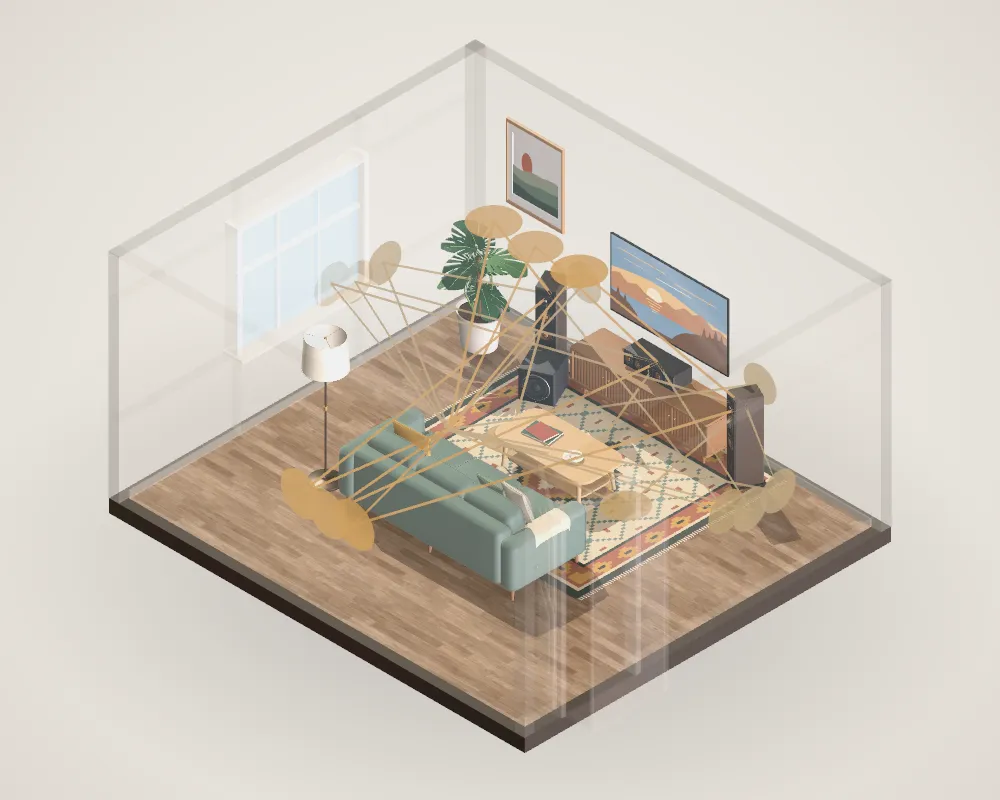
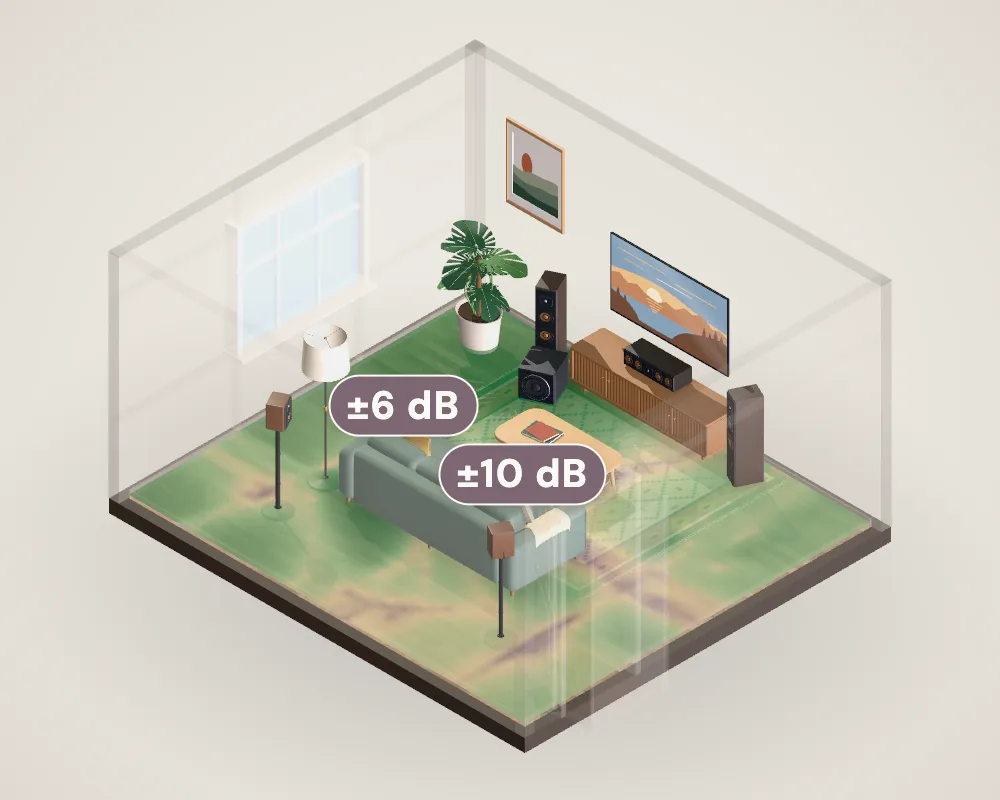
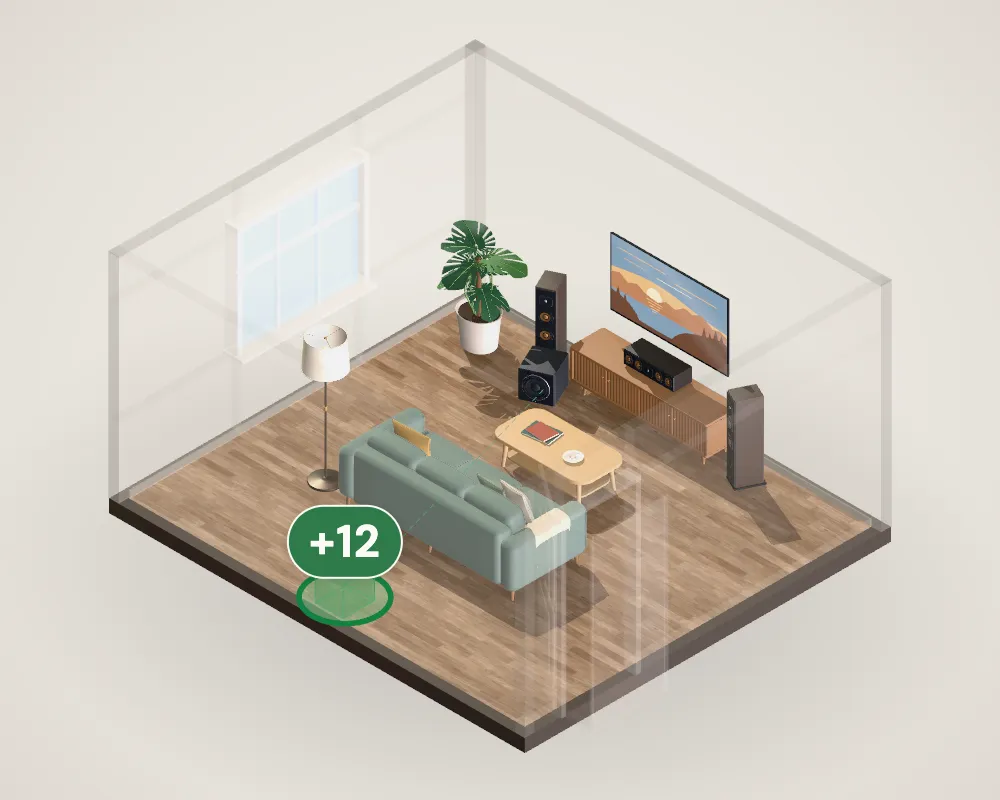
Start by covering about 15–25% of the wall area (Primacoustic’s starting point; 25% or more for a dedicated theater). In a 15 × 13 ft living room with an 8-ft ceiling that’s roughly 70 to 115 square feet: about nine to fourteen 2 × 4 ft panels, but most living rooms with a rug, curtains and soft furniture need fewer. Put the first four at the side-wall reflection points, add a ceiling cloud and panels on the wall behind the seats, then listen before adding more.
Two rules of thumb
Panel makers publish coverage guidance, but they measure it differently:
- Primacoustic: 15–25% of the wall surface area as a starting point; 25% or more for critical listening and theaters.
- Acoustimac: 25–30% of all hard surfaces, which includes the ceiling and bare floor.
Neither is a standard, and they shouldn’t be compared directly. Both say the same thing: a meaningful fraction of the room, not one or two panels.
Worked out for common rooms
Using Primacoustic’s 15–25% of wall area, with an 8-ft ceiling and 2 × 4 ft panels (8 sq ft each). Window and door area is included, so real counts are a little lower.
| Room | Wall area | 15% | 25% | 2 × 4 ft panels |
|---|---|---|---|---|
| 12 × 11 ft | 368 sq ft | 55 sq ft | 92 sq ft | 7–12 |
| 15 × 13 ft | 448 sq ft | 67 sq ft | 112 sq ft | 9–14 |
| 16 × 14 ft | 480 sq ft | 72 sq ft | 120 sq ft | 9–15 |
| 20 × 16 ft | 576 sq ft | 86 sq ft | 144 sq ft | 11–18 |
These are upper-end starting figures for bare rooms. A living room with a large rug, heavy curtains, an upholstered sofa and bookshelves already has much of the absorption it needs, and often sounds right with half as many panels.
Add them in order, and listen
- Four panels at the side-wall first-reflection points, for the front left and right speakers. This is where panels make the clearest difference.
- A ceiling cloud between the front speakers and the seats.
- Two to four panels on the wall behind the seats, especially if the sofa sits close to it.
- Corner bass traps, if bass booms. See bass traps.
- Stop when speech is clear and the room no longer rings when you clap. CEDIA/CTA RP22’s decay target for a typical living room works out to about 0.25 seconds; well below that, extra panels make the room sound dead.
Thickness changes the count
Thick panels do more per square foot. GIK recommends 2 inches as a minimum for speech and 4 inches or more for music and cinema. ROCKWOOL’s lab test of its ROCKBOARD 60 shows why: a 2-inch board absorbed about a quarter of the sound striking it at 125 Hz, a 4-inch board nearly all of it. Ten thin panels can leave a room both dull and boomy; six thick ones usually sound better.
Let Room Studio count for youIts acoustics guide adds panels one at a time and shows how much each improves the room. Open Room Studio →Questions people ask
How many acoustic panels do I need for a living room?
Start with four at the side-wall first-reflection points. Primacoustic’s rule of thumb of 15–25% wall coverage gives about nine to fourteen 2 × 4 ft panels for a 15 × 13 ft room with an 8-ft ceiling, but a furnished room with a rug and curtains needs fewer.
Can you have too many acoustic panels?
Yes. Covering most of a room with thin panels absorbs the treble and leaves the bass, so the room sounds dull and boomy at the same time. Use thicker panels, spread them out, and stop when speech sounds clear.
Are 2-inch acoustic panels enough?
For speech and treble, yes. For film and music, GIK recommends 4 inches or more; in ROCKWOOL’s lab test, a 2-inch mineral wool board absorbed only about a quarter of the sound striking it at 125 Hz.
Sources
- Primacoustic (2023). How much acoustic treatment do I need?.Manufacturer
- Acoustimac. Acoustic panels, baffles and bass traps FAQ.Manufacturer
- GIK Acoustics (2026). How thick should acoustic panels be?.Manufacturer
- ROCKWOOL. ROCKBOARD 40/60 multi-purpose board — sound absorption data.Measurement
- CEDIA / CTA (2023). CEDIA/CTA-RP22 Immersive Audio Design Recommended Practice, v1.2.Standard
- Primacoustic (2023). Acoustic panel placement: the mirror trick.Manufacturer
Numbers on this page follow these sources. Where a figure is our own calculation or a rule of thumb, the text says so. Found a mistake? Tell us.