Small room home theater: how to make it work
Small rooms are easier to make look like a cinema and harder to make sound like one.
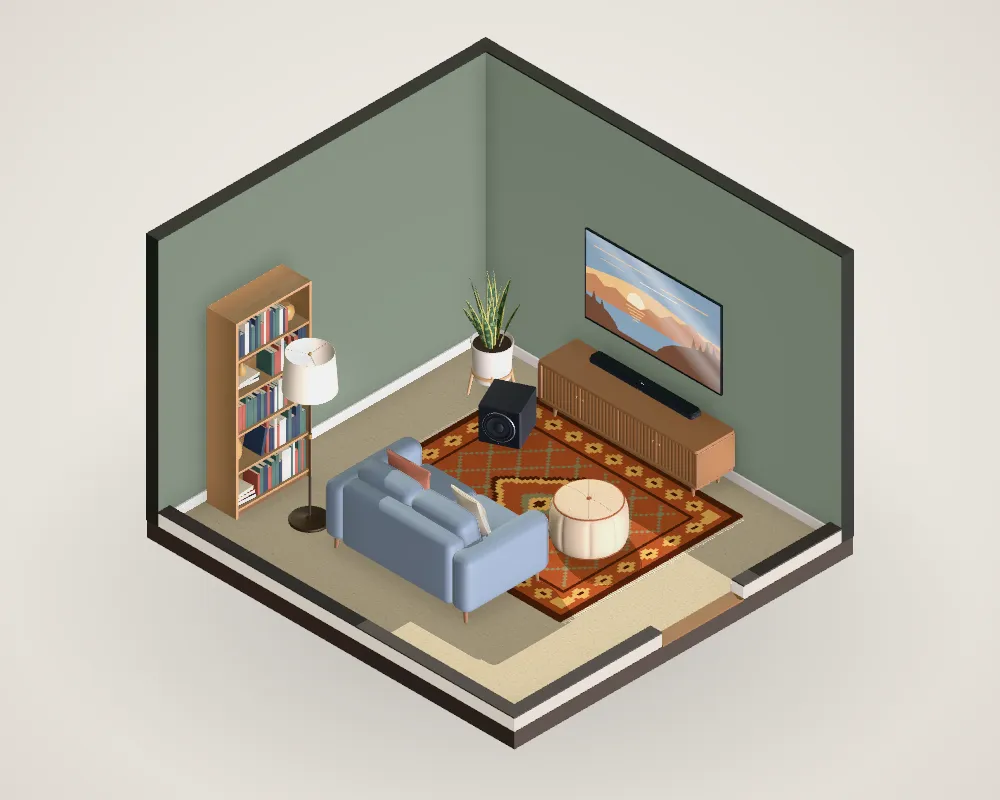
Because you sit close, a small room suits a bigger screen than you’d expect: from 7 feet, a 52- to 70-inch TV fills the recommended 30–40° of your view, so a 65-inch TV in a 12 × 11 ft room looks cinema-sized. The hard part is sound: keep the seat off the back wall if you can (CEDIA/CTA RP22 suggests at least 0.5 m from your head to any wall), use a soundbar or 5.1 with side surrounds rather than 7.1, avoid the exact middle of the room, and add soft furnishings to cut reflections from nearby walls.
The screen: bigger than you’d think
The viewing-angle rule works in your favor in a small room. You sit close, so a modest screen fills a lot of your view:
| Eyes to screen | Screen for 30–40° |
|---|---|
| 6 ft | 44–60 in |
| 7 ft | 52–70 in |
| 8 ft | 59–80 in |
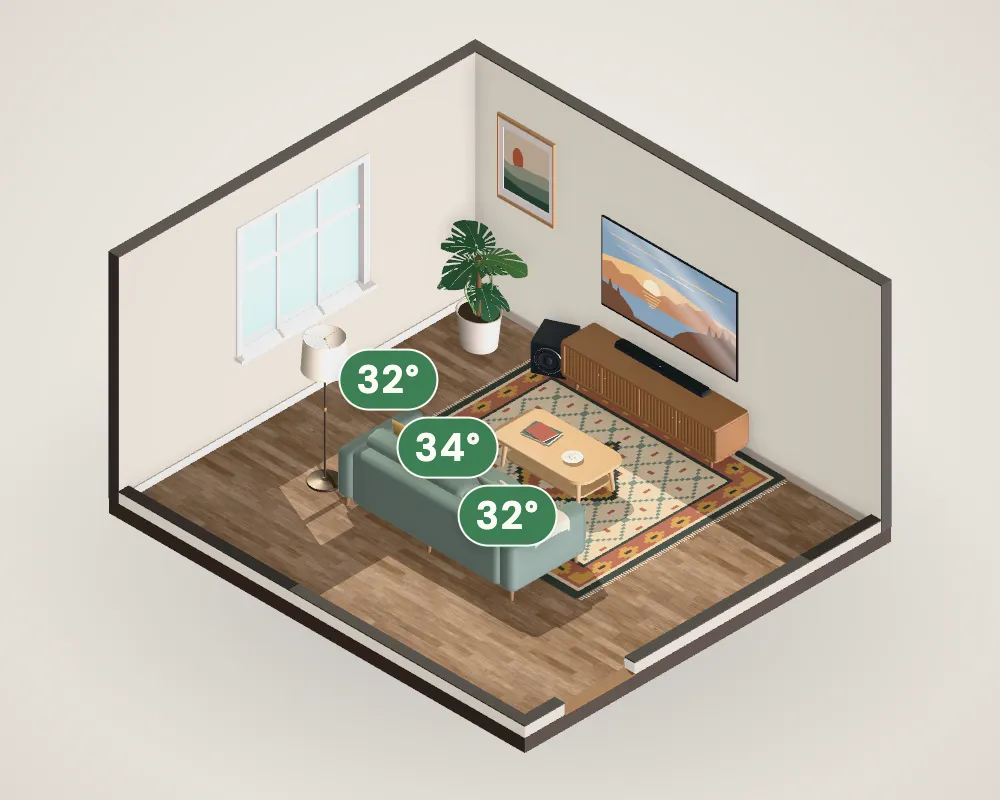
A 65-inch TV in a 12 × 11 ft den, viewed from about 8 feet, fills about 32° of your view: inside the recommended band, and plenty for films. What limits screen size in small rooms is usually the wall: allow for the TV’s full width (about 57 inches for a 65-inch set) plus some space either side.
TV size calculatorEnter your seating distance to see which sizes fit the recommended band. Open →Seating: off the wall if you can
In small rooms the sofa often ends up against the back wall. That’s fine for the picture, harder for sound:
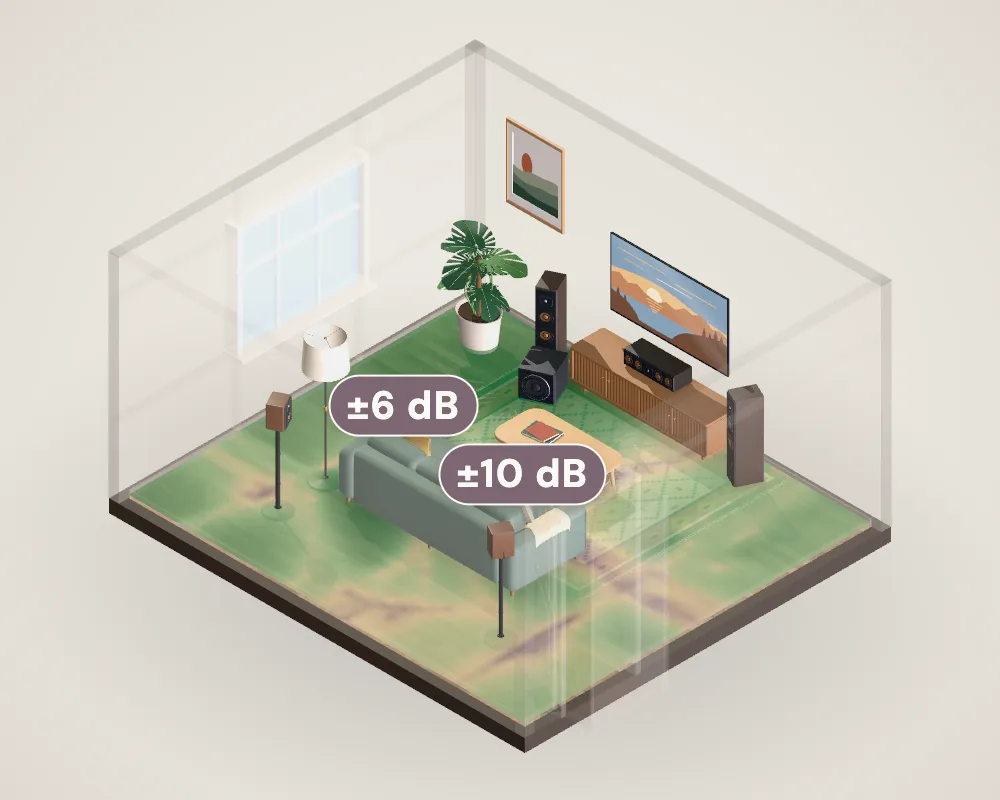
- Bass builds up at walls. A head right against the back wall sits in a bass peak. CEDIA/CTA RP22’s entry-level guideline is at least 0.5 m (about 20 inches) from your head to any wall; even a foot of space helps.
- Avoid the exact middle. The room’s first length mode cancels at the halfway point, so a sofa in the dead center of a small room can lose bass.
- One row. A second row in a small room usually ends up against the back wall and too close to the rear surrounds.
Sound: soundbar or 5.1 with side surrounds
- A soundbar is the simplest fit: one speaker under the TV, nothing on the floor. See soundbar placement.
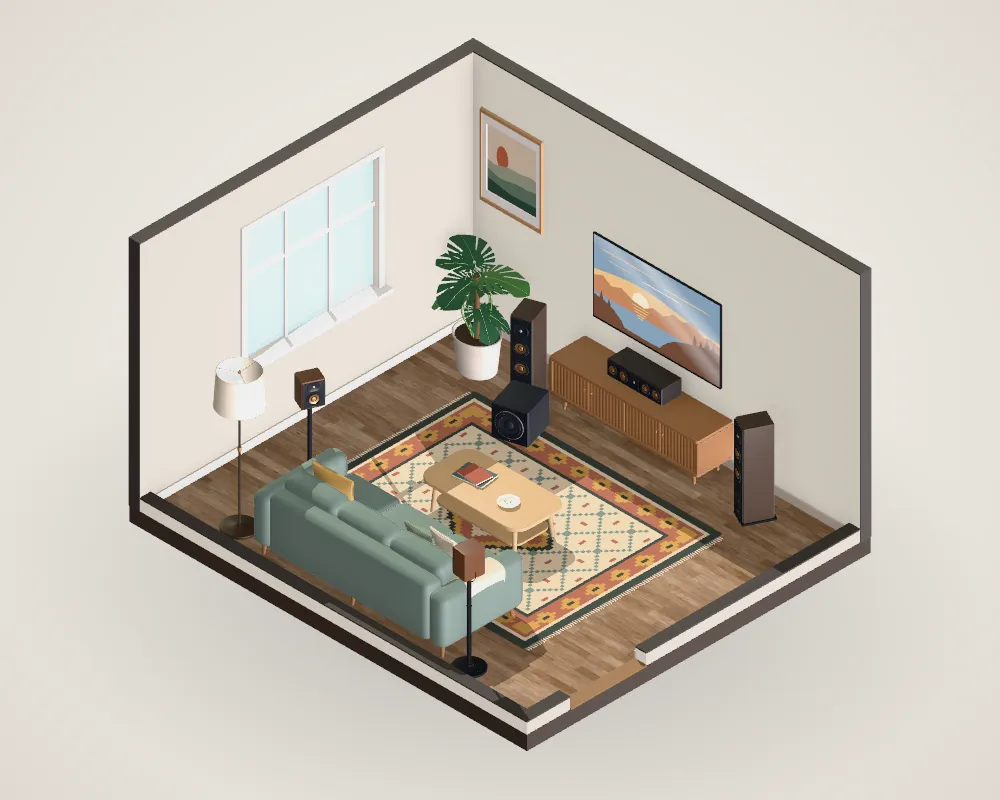
- 5.1 with side surrounds beside the seats, at about ear height, if you want surround. Skip rear surrounds if they’d be right behind your heads.
- Height speakers (5.1.2) fit small rooms well: two in-ceiling speakers slightly in front of the seats, or up-firing speakers if the ceiling is flat and between about 7.5 and 14 ft high.
Small rooms also get a bass boost below their first resonance, which SVS calls room gain, so a modest subwoofer can sound big. Place it with the subwoofer crawl.
Reflections are closer
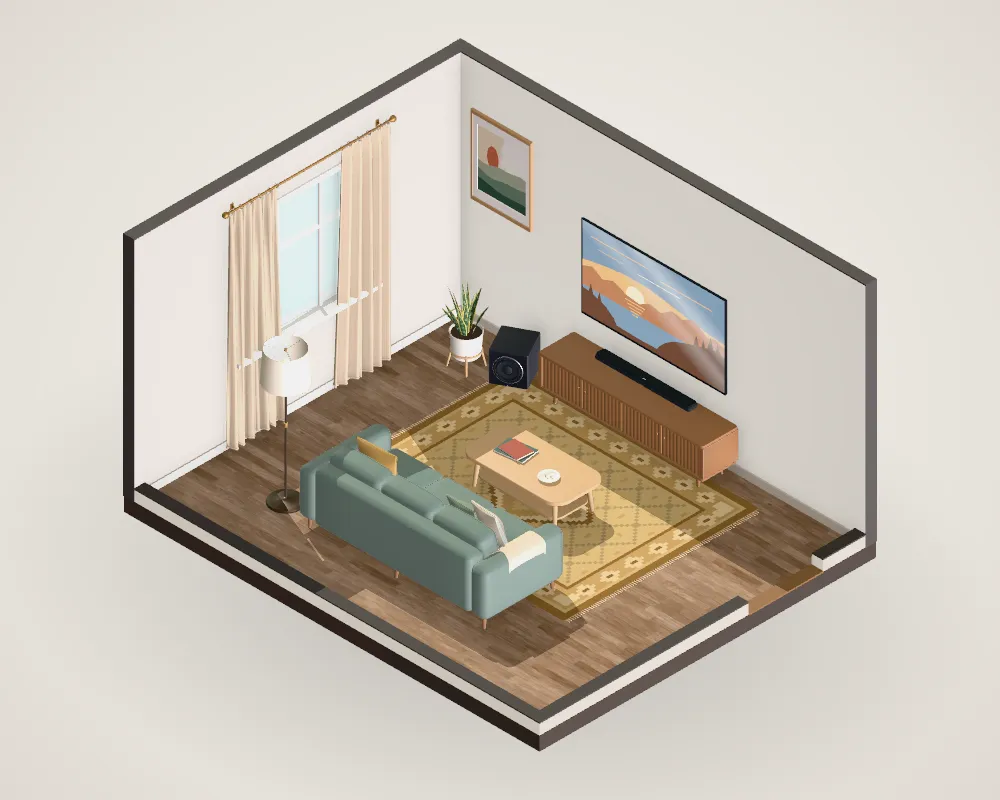
Walls are close to the speakers and the seats, so first reflections are loud. A rug, curtains, a full bookshelf and two to four panels at the side-wall reflection points make a small room sound larger and clearer. Use panels at least 2 inches thick; GIK recommends 4 inches for film and music.
Questions people ask
What size TV for a small room?
Base it on your seating distance, not the room. From 6 feet, 44–60 inches fills the recommended 30–40° of your view; from 7 feet, 52–70 inches; from 8 feet, 59–80 inches. Many small rooms suit a 55- or 65-inch TV.
Can you have surround sound in a small room?
Yes. A 5.1 system with the surrounds on the side walls beside the seats works well. Avoid rear surrounds right behind your head; CEDIA/CTA RP22 recommends side surrounds when the seating is against the back wall.
How do I get good bass in a small room?
Small rooms boost the deepest bass but have strong peaks and dips. Keep your seat out of the exact middle and off the back wall if possible, find the sub’s spot with the subwoofer crawl, and consider thick corner bass traps.
Sources
- SMPTE (2017). ST 2080-3:2017 Reference Viewing Environment for Evaluation of HDTV Images.Standard
- THX. Viewing Guide FAQ.Professional guide
- CEDIA / CTA (2023). CEDIA/CTA-RP22 Immersive Audio Design Recommended Practice, v1.2.Standard
- SVS. The Art of Subwoofer Placement.Manufacturer
- SVS (2020). What is subwoofer room gain?.Manufacturer
- GIK Acoustics (2026). How thick should acoustic panels be?.Manufacturer
- Primacoustic (2023). How much acoustic treatment do I need?.Manufacturer
- Dolby Laboratories (2018). Dolby Atmos Home Theater Installation Guidelines, r3.1.Manufacturer
Numbers on this page follow these sources. Where a figure is our own calculation or a rule of thumb, the text says so. Found a mistake? Tell us.